

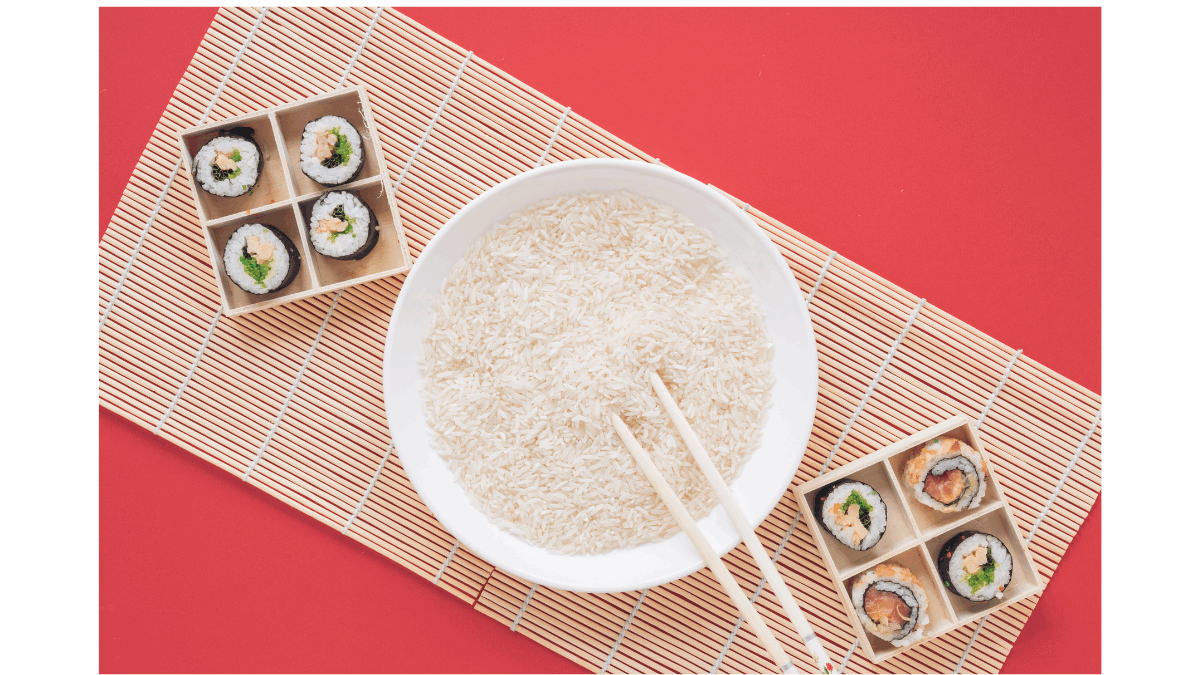
If you’re learning Japanese, you’ve probably come across the word gohan (ごはん). It’s one of the first words taught in any beginner class, usually translated as “rice” or “meal.” But did you know that gohan represents much more than just food? In Japan, rice is not only a daily staple—it’s deeply connected to the country’s history, traditions, and even the Japanese language itself. By understanding the role of rice in Japanese culture, you also unlock new meanings behind everyday words and expressions. In this article, we’ll explore how a simple grain has helped shape the way people in Japan eat, speak, and live.
Rice in the Language of Daily Life
Nothing is more present in the Japanese diet than rice. Even in the language, gohan can mean both “rice” and “meal,” depending on the situation. For example:
朝ごはん (asa-gohan) → breakfast (literally: “morning rice”)
昼ごはん (hiru-gohan) → lunch
晩ごはん (ban-gohan) → dinner
There are also different words for rice depending on its state. Okome (お米) refers to raw rice, while genmai (玄米) means whole-grain rice. Rice shows up everywhere in Japanese food culture, from traditional dishes like onigiri (rice balls) or sushi, to snacks like senbei (rice crackers) or mochi. Even sake, Japan’s famous rice wine, comes from this essential grain.
For learners of Japanese, understanding rice-related words is like opening a door to everyday life in Japan.
A Grain with Deep History and Meaning
Rice has been cultivated in Japan since the Yayoi period (around 300 BCE), when rice farming techniques arrived from China. However, in the early days, rice wasn’t something everyone could eat. Much of the rice produced by farmers was used to pay taxes to the government, meaning only the wealthiest people regularly ate rice.
It wasn’t until the Edo period (1603–1868) that rice became a regular part of meals for ordinary people. As Japan expanded its territory in the early 20th century, it even tried growing rice in places like Taiwan and Korea. Why? Because over 70% of Japan’s land is volcanic rock—not ideal for farming.
But rice in Japan is more than just a food. It’s also a symbol of life, prosperity, and community. To protect local rice farmers, the Japanese government gives subsidies and controls foreign rice imports. This has been a topic of debate in Japan for many years.
Rice Today: More Than Just a Meal
Even today, rice is part of everyday conversation in Japan—not just on the dinner table. Recently, a government official had to resign after making a joke about rice. TV programs often discuss the price of rice, and supermarket owners are sometimes accused of raising prices unfairly.
For me, rice is part of daily life in another way. In my neighborhood, I often pass by rice fields that have just been planted last month. I love seeing the small green shoots rising from the water, each one carefully placed in neat rows. Those fields remind me that rice is not just a part of history or language—it’s part of real life, growing right in front of me.
Final Thoughts for Learners
Learning a language isn’t just about vocabulary lists or grammar drills—it’s also about understanding culture. In Japan, rice is more than a meal. It’s a symbol, a history, and a part of the very words Japanese people use every day. So next time you hear the word gohan, remember: you’re not just talking about food—you’re speaking about centuries of Japanese life and culture.
Leave a Comment