

Japanese summer can be really hot and humid. It lasts from June to September, with the hottest months being July and August. This year, the heat was especially intense, reaching about 40 degrees Celsius in some cities. During summer, there are many festivals, special treats, and celebrations. Students enjoy summer vacation, many people travel within and outside Japan, and tourists crowd the main cities. In this article, we explore some Japanese words that are useful during this hot season. Whether you are living in Japan or just visiting, you can practice your Japanese with this Summer Vocab.
Weather Words
The first word we need to know is natsu (夏), which means summer. This season is characterized by high temperatures, expressed with atsui (暑い, hot). To talk about the middle of the summer, when it’s especially hot, use manatsu (真夏, midsummer).
Between June and July, there is the rainy season called tsuyu (梅雨), about two cloudy weeks when it rains almost every day and the weather can get a little suzushii (涼しい, cool). Sometimes, a typhoon or taifu (台風) visits Japan during this season.
Summer Clothing and Accessories
Common clothes for the matsuri (祭り, festival) include yukata (浴衣, summer kimono), which is lighter and easy to wear. People often use sensu (扇子, folding fan) or uchiwa (団扇, round paper fan) to cool themselves, though electronic fans are also common.
Hansode (半袖, short-sleeve shirts) are popular, and it is important to use hiyakedome (日焼け止め, sunscreen) and sangurasu (サングラス, sunglasses) to avoid sunburn.
Summer Treats, Festivals and Activities
One of the most delicious treats during natsu (夏) is kakigori (かき氷, shaved ice), served in Japanese cafés, restaurants, or yatai (屋台, festival stalls). Aisukurīmu (アイスクリーム, ice cream) can be found year-round but is more popular in the hot months.
Summer is also the season for suika (スイカ, watermelon), both red and yellow, perfect for hydration. Cold noodle dishes like hiyashi chūka (冷やし中華) and tsumetai sōmen (冷たいそうめん) are also common in restaurants.
There are two main events everyone looks forward to in summer: hanabi taikai (花火大会, fireworks festival) and Bon Odori (盆踊り, Bon dance), performed during Obon (お盆, Japanese festival honoring ancestors). People also enjoy the umi (海, beach/sea) and outdoor activities like kyanpu (キャンプ, camping) and swimming in the puru (プール, pool).
Summer Nature
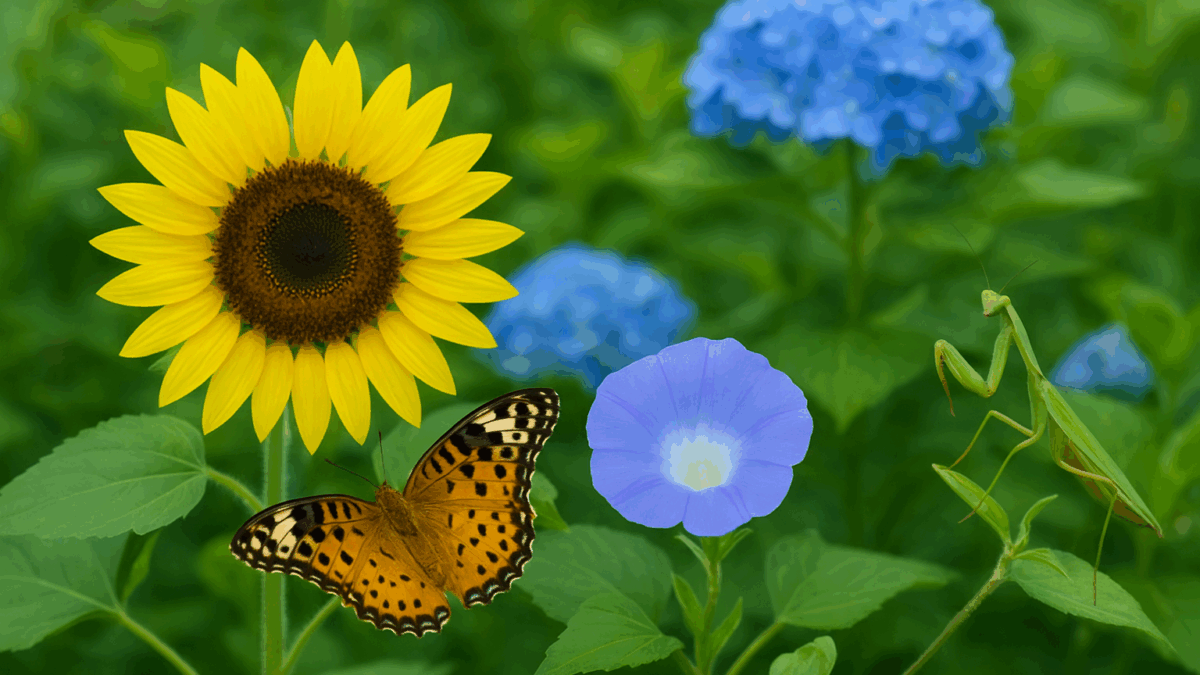
Summer is also the season for gardening and enjoying flowers. Common flowers include himawari (向日葵, sunflower), asagao (朝顔, morning glory), and ajisai (紫陽花, hydrangea), which blooms at the beginning of summer.
Many flowers attract insects, adding to the characteristic soundscape of summer in Japan. You might hear semi (蝉, cicada), see chō (蝶, butterfly), encounter batta (バッタ, grasshopper), or notice the fascinating kamakiri (カマキリ, praying mantis).
Summer in Japan is not just a season—it is an experience. With its festivals, food, nature, and traditions, it invites everyone to enjoy life under the sun. Try using these words in your daily life and immerse yourself in the vibrant world of Japanese summer!
Japanese Summer Vocabulary
| Kanji/Katakana | Romaji | Meaning (English) |
|---|---|---|
| 夏 | natsu | summer |
| 暑い | atsui | hot |
| 真夏 | manatsu | midsummer |
| 梅雨 | tsuyu | rainy season |
| 涼しい | suzushii | cool |
| 台風 | taifu | typhoon |
| 祭り | matsuri | festival |
| 浴衣 | yukata | summer kimono |
| 扇子 | sensu | folding fan |
| 団扇 | uchiwa | round paper fan |
| 半袖 | hansode | short-sleeve shirt |
| 日焼け止め | hiyakedome | sunscreen |
| サングラス | sangurasu | sunglasses |
| かき氷 | kakigori | shaved ice |
| 屋台 | yatai | festival stall |
| アイスクリーム | aisukurīmu | ice cream |
| スイカ | suika | watermelon |
| 冷やし中華 | hiyashi chūka | cold Chinese-style noodles |
| 冷たいそうめん | tsumetai sōmen | cold somen noodles |
| 花火大会 | hanabi taikai | fireworks festival |
| 盆踊り/お盆 | Bon Odori/Obon | Bon dance/Bon festival honoring ancestors |
| 海 | umi | beach / sea |
| キャンプ | kyanpu | camping |
| プール | puru | pool |
| 向日葵 | himawari | sunflower |
| 朝顔 | asagao | morning glory |
| 紫陽花 | ajisai | hydrangea |
| 蝉 | semi | cicada |
| 蝶 | chō | butterfly |
| バッタ | batta | grasshopper |
| カマキリ | kamakiri | praying mantis |
Leave a Comment