

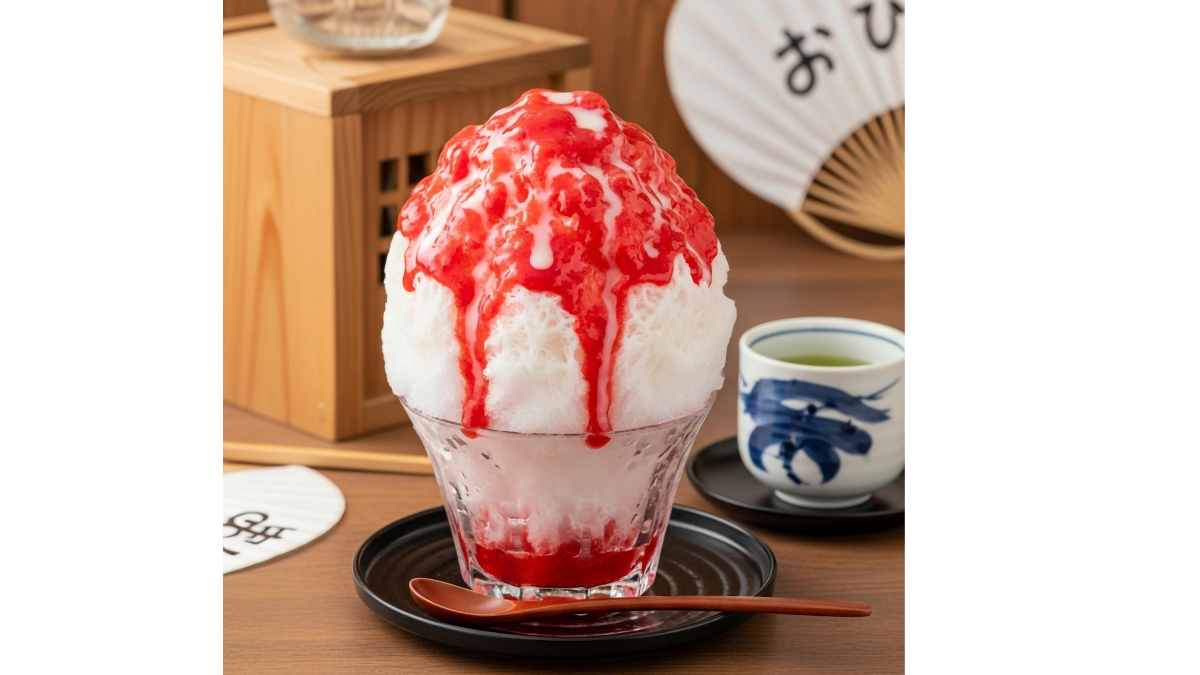
Sweets in Japan are delicious, but when summer arrives and temperatures soar, cold desserts become especially tempting. One of the most popular is kakigori, Japanese shaved ice served with a variety of flavors and toppings.
Kakigori can be very simple: a mound of finely shaved ice topped with flavored syrup, condensed milk, or both. Some versions are refreshing and delicious, while others can taste a little artificial because of the brightly colored syrups. But at shops specializing in kakigori, this humble summer treat can become something much more elaborate, with carefully prepared toppings, seasonal fruit, and complex flavors. In Kyoto, for example, matcha kakigori is a popular choice.
Although kakigori may look like a modern dessert, its history goes back centuries. During the Heian period (794–1185), Sei Shōnagon, a lady at the imperial court, mentioned shaved ice in The Pillow Book. At the time, ice was a luxury available mainly to members of the aristocracy, making this early version of kakigori very different from the affordable summer treat enjoyed throughout Japan today.
As Japan modernized, kakigori changed as well. Improvements in ice production made it more accessible, and eventually shaved ice became a familiar part of Japanese summer culture. Today, alongside the simple versions sold at festivals and summer events, specialized shops offer elaborate creations that could easily be described as gourmet kakigori.
Classic Kakigori Flavors
Kakigori comes in an enormous variety of flavors, and modern shops are constantly creating new combinations. Still, several classic flavors remain popular. Strawberry, melon, lemon, and Blue Hawaii are often associated with colorful festival-style kakigori, while matcha is a more traditional option. Condensed milk, sweet red bean paste (anko), and shiratama rice-flour dumplings can also be added as toppings.
Whether it is a simple cup of shaved ice eaten at a summer festival or an elaborate dessert served at a specialty shop, kakigori is one of the sweetest—and coolest—ways to experience summer in Japan.
Photo: Cup Stock photos by Vecteezy
Leave a Comment