

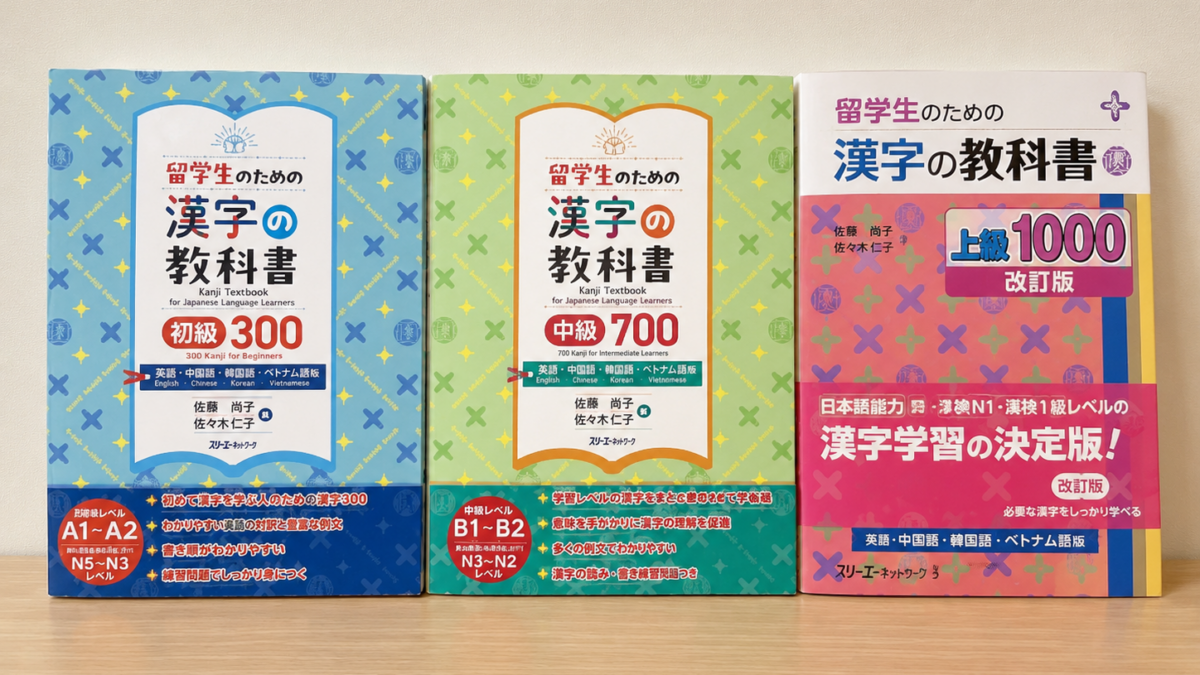
A three-volume series that offers a clear and progressive approach to mastering Japanese kanji from JLPT N5 to N1 levels.
Learning kanji is one of the greatest challenges for students of Japanese. While it is possible to communicate verbally without extensive reading and writing skills, developing advanced proficiency in the language becomes much easier with a strong foundation in kanji. For this reason, many learners spend years searching for study materials that are both effective and easy to follow.
I certainly did. Since moving to Japan, I have experimented with a wide variety of methods to learn kanji. I have used drill books designed for Japanese schoolchildren, memorized characters with flashcards, tested digital apps, and worked through textbooks that promised to be the definitive solution for learning kanji. Some of these resources were excellent, while others ended up sitting untouched on my bookshelf after a few weeks. Over time, I realized that the most effective materials are not necessarily the most famous or the most complex, but the ones that provide a clear structure and make it easier to build a consistent study routine.
One series that has stood out to me is Kanji Textbook for Japanese Language Learners (留学生のための漢字の教科書), written by Naoko Satō (佐藤尚子) and Hitoko Sasaki (佐々木仁子). Designed specifically for international students, the series consists of three volumes: Basic, Intermediate, and Advanced.
What immediately attracted me to these books was their simplicity. Unlike some kanji resources that present large amounts of information on every page, this series introduces characters in manageable groups and focuses on the information learners actually need. The layout is clean, easy to follow, and suitable for both classroom use and self-study.
A major strength of the series is its progressive organization. The Basic volume introduces approximately 300 kanji, covering the characters commonly associated with the JLPT N5 and N4 levels. The Intermediate volume adds around 700 additional kanji, bringing the total to approximately 1,000 characters. The Advanced volume introduces roughly another 1,000 kanji, helping learners work toward the level of literacy expected for the JLPT N1. Together, the three volumes cover the 2,136 jōyō kanji (常用漢字), the set of characters designated by the Japanese government for everyday use.
Each kanji entry includes key information such as readings, stroke count, radical, and example vocabulary. This combination allows learners to study not only the characters themselves but also their practical use in context. The first volume also includes writing drills that I found particularly helpful when building a foundation in kanji.
Another aspect I appreciate is the manageable pace of the lessons. Rather than overwhelming students with large amounts of information at once, the books introduce kanji in carefully structured groups. This approach can help learners build confidence and maintain steady progress over time. I also found that the gradual increase in difficulty between volumes makes the transition from beginner to advanced study feel much less intimidating.
All three volumes include review exercises at the end of each unit, allowing learners to reinforce newly acquired kanji before moving on to the next section. This feature makes the series suitable not only for classroom use but also for independent learners who want a clear way to check their understanding and track their progress.
Of course, no textbook can eliminate the effort required to master kanji. Success still depends on regular review, repeated exposure, and consistent practice. Nevertheless, among the many resources I have used throughout my Japanese-learning journey, this series remains one of the most practical and accessible for international students.
Overall, I highly recommend this series to both self-learners and students studying with a teacher. No textbook can magically make the 2,136 jōyō kanji easy, but this series comes closer than most to making the process manageable, efficient, and enjoyable. For learners looking for a structured and comprehensive approach to kanji study, Kanji Textbook for Japanese Language Learners is a series well worth considering.
Leave a Comment